Stories from the apiary · the BeeCenter blog
The first piece is still being written
This is where what the Honey Garden teaches will be written down: urban beekeeping, work with children and with companies, the projects, and the bees themselves. The blog is open, the topics are chosen, and nothing has been published yet.
01What the blog is for
A workshop ends, and the explanation stays spoken
Seventy-eight workshops have been held so far. Everything shown in them is explained out loud, in front of the group that came that day, and there it ends.
That is why this blog exists. The topics come out of the garden: what happens to a hive in winter, whether a bee in the city has anything to find, what a day looks like when a whole team arrives.
When a piece is finished it goes on this page, in Serbian and in English.
02Topics
What gets written about here
Every piece will carry one of five labels. They were chosen before the first piece, so they would not have to be invented later.
Nothing has been published yet. When the first piece is finished it will appear here, with its date.
The first topics in preparation: urban beekeeping, Team Building in the Garden, Family Day, bee facts, projects and partnerships.
„Let us make a city that hums more.”
03Bee facts
While the first piece is written, here are six facts
All of them are about the bee, and all of them come up in the garden, at the workshops and in the api chamber.
5
eyes on a single bee: two large compound ones at the sides and three simple ones on top of the head.
UV
light bees can see and we cannot: on a flower they read patterns invisible to the human eye.
200
beats a second a bee’s wings make, which is why flight sounds like buzzing.
Ples
is how bees talk: by it they tell the others the direction and distance to a source of food.
2.000
eggs a day a queen can lay at the height of the season, roughly her own body weight.
20.000+
species of bee live in the world, and most of them do not live in hives and make no honey.
04In the meantime
This is already written on the site
The same topics already have pages of their own, under the projects and the programmes.
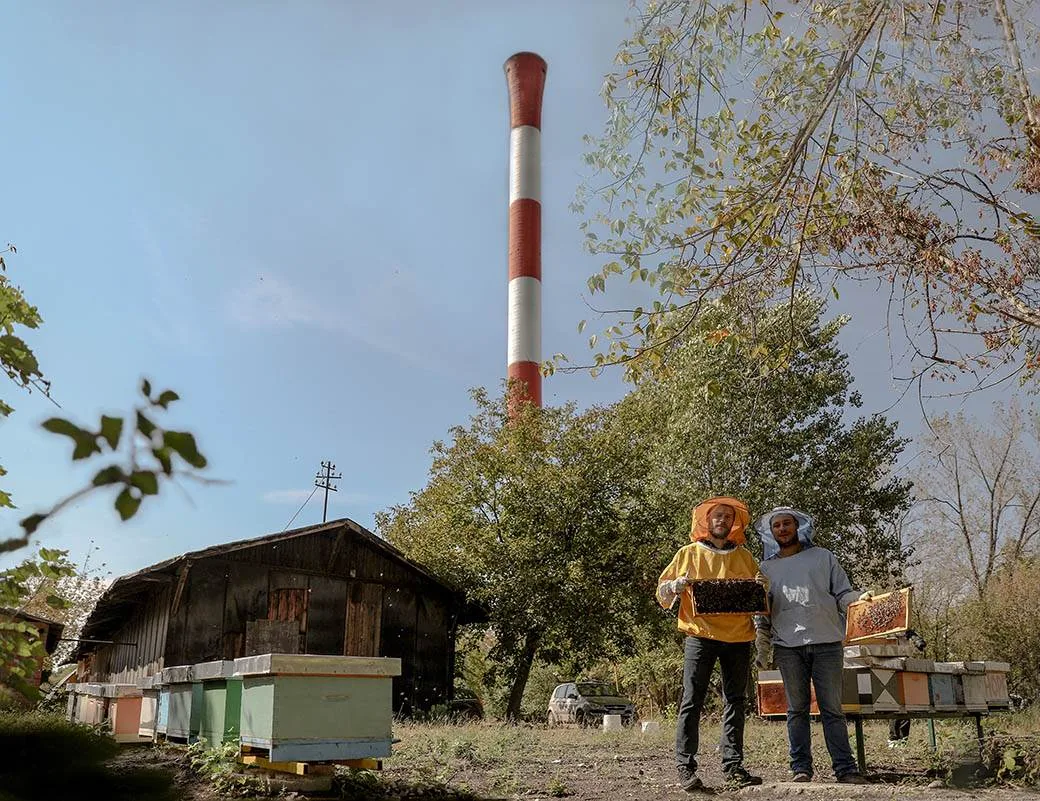
Urban beekeeping
Why a hive on a roof makes sense, and what a bee finds in the city.
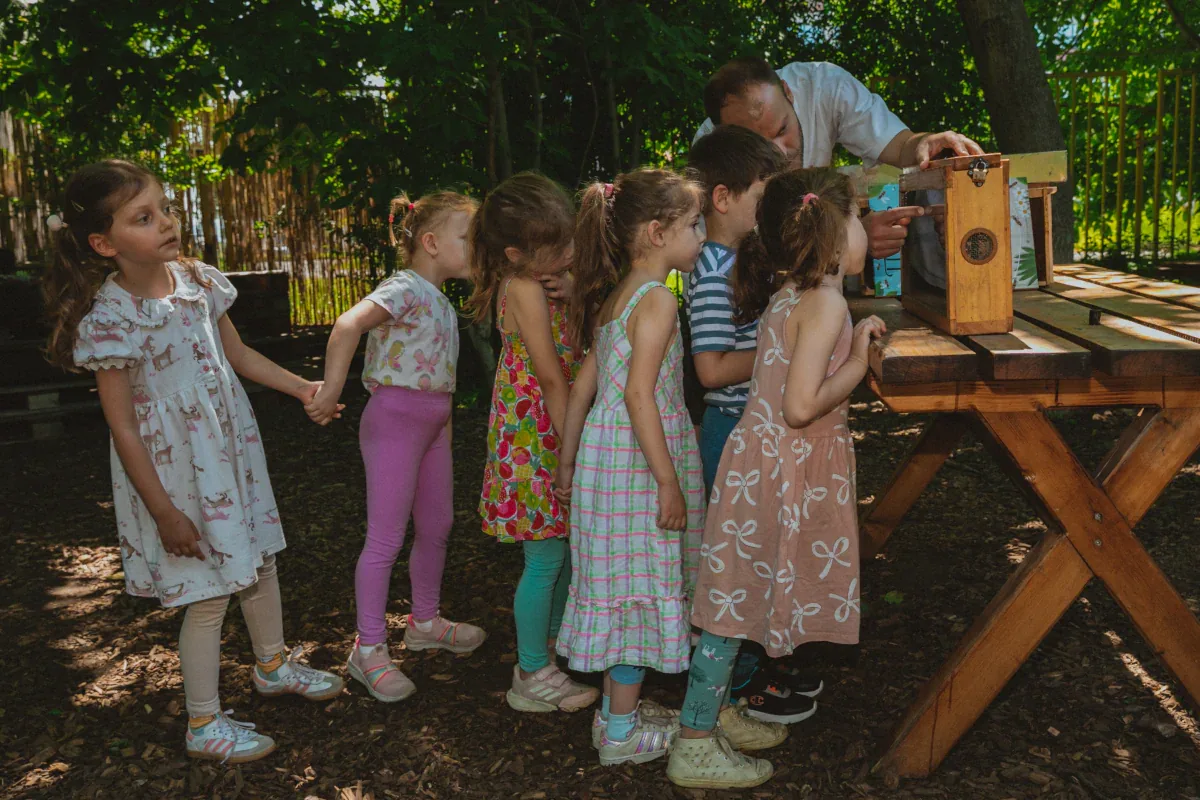
The Hive of Knowledge
The glass hive, the comb and the gear go into kindergartens and schools.

Planting and biodiversity
5,200 plants in the ground, and the reason they are counted.

Learning from bees
Bee a Team: the questions a hive puts to a team.
05Next step
If you have a question, it is already a topic
Write to us about what you would read on bees, on the garden, or on the work with children and companies. A question from an enquiry can become a piece.
Membership of the Friends of the Honey Garden is free.