For companies · Bee a Team
What can your team learn from bees?
A different view of communication, roles, responsibility and working together.

01Bee a Team
So why not learn about organisation too?
People have been learning from nature for centuries. Its solutions have inspired architecture, technology, medicine, the materials we use and the way we build whole systems.
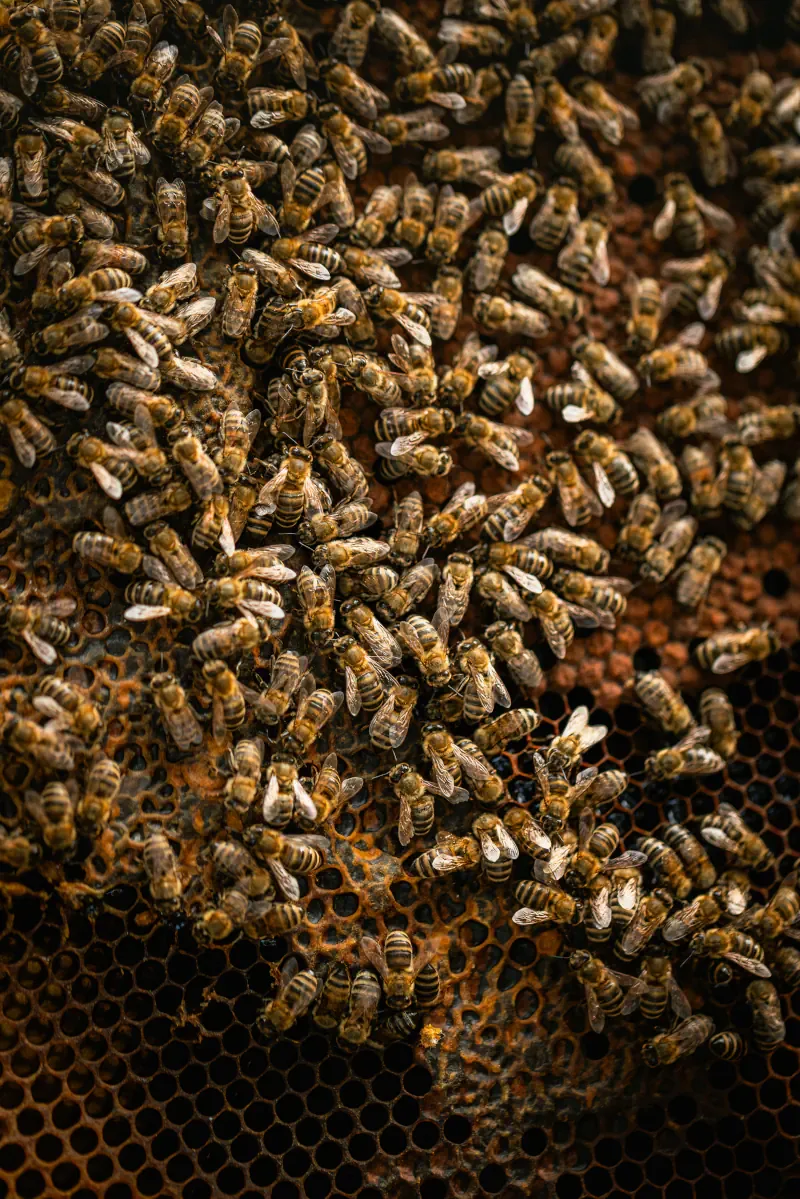
A bee colony is one of the most organised systems in nature. Thousands of individuals with different roles function as one body: they exchange information, adapt to change and work towards a common goal.
Bee a Team is training for companies in which we peek into the world of the bees and find out what their way of organising can teach us about our own teams.
02Six questions
And how does your team work?
Does the right information always reach the right people?
A forager that finds a good patch does not announce it to everyone. She dances in front of the ones who need the news, and they fly out on the right bearing.
Is it a good thing to multitask?
A bee changes jobs through her life: cleaning cells, feeding brood, building comb, guarding the entrance, then foraging. The work changes over a lifetime, not over one morning.
What happens when circumstances change?
The forage dries up, or the queen is lost. The colony then moves its own workers onto other jobs, without a single order from above.
Does everyone do their own job, or does everyone work for the same goal?
The honey in the comb is nobody’s personal score. It is the winter store, and no single bee will eat it alone. The question is what the work your team does in a quarter is finally for.
How much does the individual matter, and how much the community?
There is no single most important bee in a hive. The community survives thanks to different roles and shared work.
And does good organisation always need someone to give orders?
The queen gives no orders; she lays eggs. The decision to swarm is made by the whole colony.
A community of several tens of thousands of members meets the same challenges every day.
Only it has no e-mails, no long meetings and no needless complication.
“Because one bee cannot do what a hive can.”
03The format
A completely different view of organisation
Bee a Team is not another classic lecture on teamwork. We bring no ready-made formula for a successful team, and we do not try to turn your company into a hive.
Instead, we step out of the business world for a moment. We watch how a fascinating natural system works and uncover some of the principles it rests on, and then we think together: what can we learn from the bees? And more importantly: what of it can we carry over into our own organisation?
The answers we will keep for the lecture.
04Why Bee a Team
Because we have heard about teams many times before.
About communication. Leadership. Sharing responsibility. Common goals.
Bee a Team opens a conversation about those same questions from a perspective you have probably never looked at them from before.
Through the story of the bees and real examples from the hive, employees meet a world that is at once completely foreign and surprisingly familiar.
The goal is not that they leave the lecture as beekeepers. The goal is that afterwards each of them carries a slightly different view of the world.
05After the lecture
The lecture ends, but the conversation is only beginning
The best training is not the one after which we remember the most slides. It is the one that leaves us with a question we are still turning over when we get back to our work.
Bee a Team was built with exactly that idea: to give employees a new experience, spark their curiosity and open a different conversation about how we function together.
06This winter
Bee a Team is coming to you
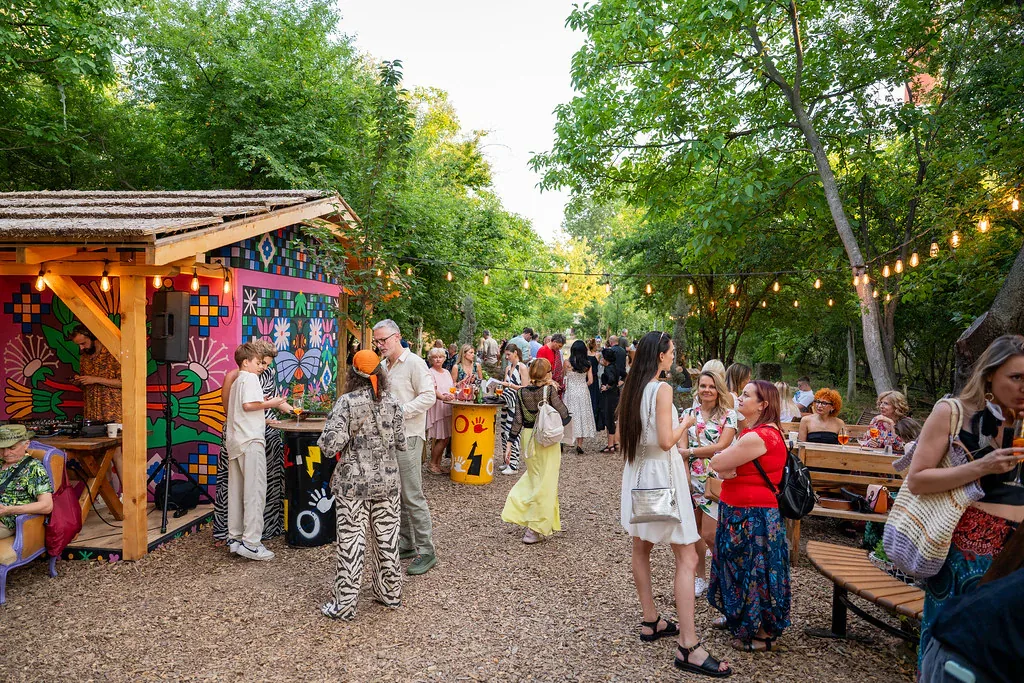
While the bees spend the winter months in their hives, we step out of the Honey Garden and come to companies.
We hold Bee a Team in your offices, as training for your employees.
- Periodthe winter months
- Locationyour company
- Formatan interactive lecture
- LanguageSerbian and English
This winter, give your team the chance to meet a completely different world.
07Next step