Our projects · Planting and biodiversity
Why we count every single plant we put in
5,200 plants have gone into the ground so far, inside the garden and outside it. We plant what a bee can actually work, and the ground that should stay unmown stays unmown. The planting runs through the Friends of the Honey Garden and through companies that back an action.
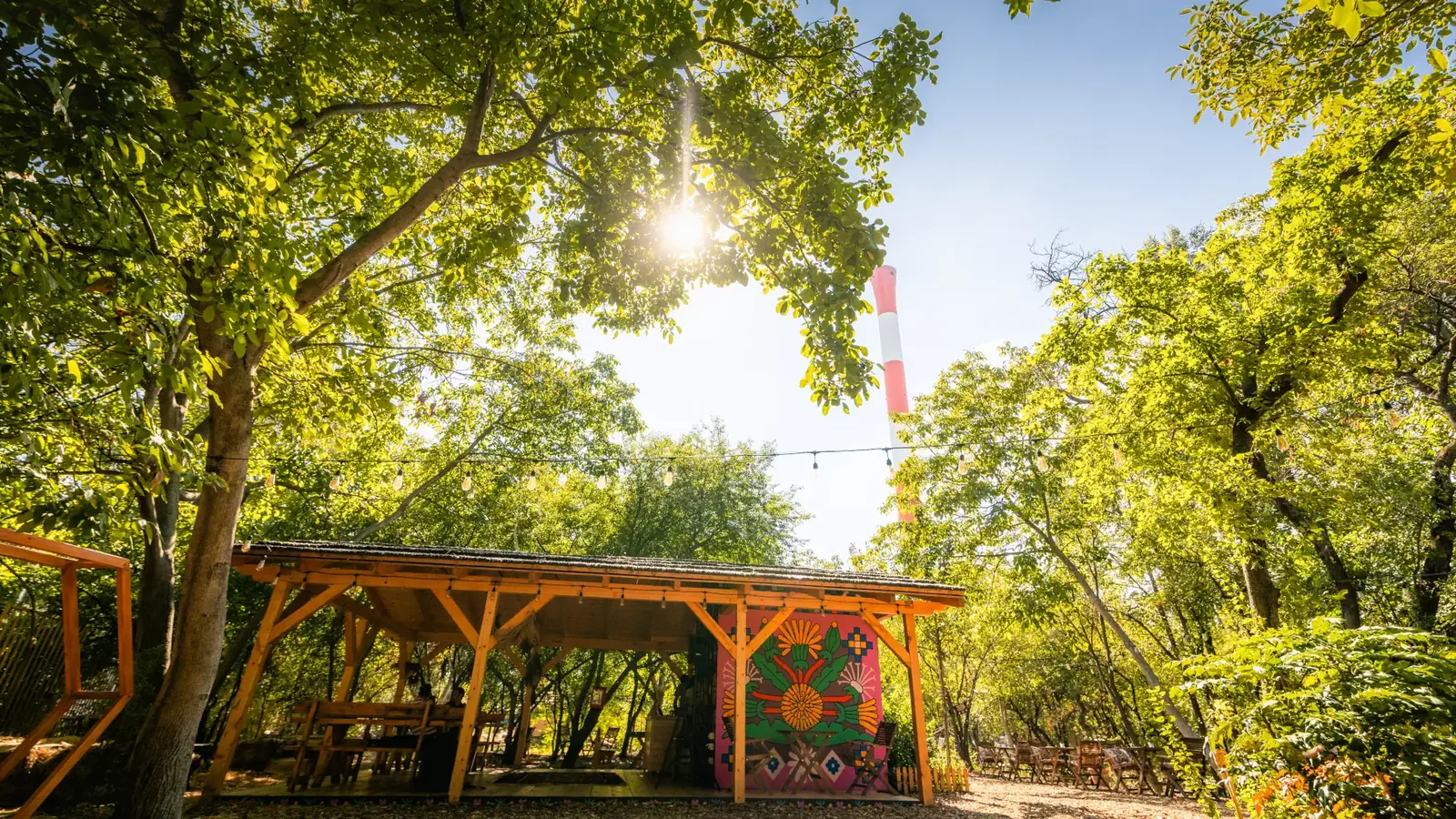
01Why we keep the count
A single tree can be counted
5,200 plants have gone in so far. We keep the count because it is the part of any greening story that can be checked: a sapling is either in the ground or it is not.
So each action leaves a written record of what went in and where. When someone asks the following season what survived, they can go and look.
The number moves slowly. A garden is measured by what got through the season, not by what was announced.
02What gets planted
How we decide what goes into the ground
A nectar-bearing species is one a bee can actually take nectar or pollen from. The list is drawn up around four questions, and looks are not the first of them.
- Does it give nectar and pollenAn ornamental cultivar can flower beautifully and give a bee nothing. We choose what actually gets carried back to the hive.
- When it flowersWe plant so that one flowering runs into the next, from early spring into autumn. The empty stretch between two flowerings is what hurts a colony most.
- Will it take the cityCity ground is compacted and full of rubble. The garden itself was made on exactly that, so we know what it looks like.
- Is it allowed to stayWe plant where a sapling is allowed to remain once the action is over. If nobody takes on the watering in the first year, the planting is pointless.
03The forage calendar
The season is read by what is in flower
A colony does not live off one flowering. A worker will travel up to three kilometres from the hive for forage, so what matters to her is what is in flower across that whole circle, not only in the garden.
The early flowers bring the first food in after winter, when the colony is at its weakest. In summer the city leans mostly on the linden, which is why lindens are what the planting actions put in.
The tail of the season is the thinnest part of the year. That is why the late flowers are left standing, and why as little as possible gets mown.
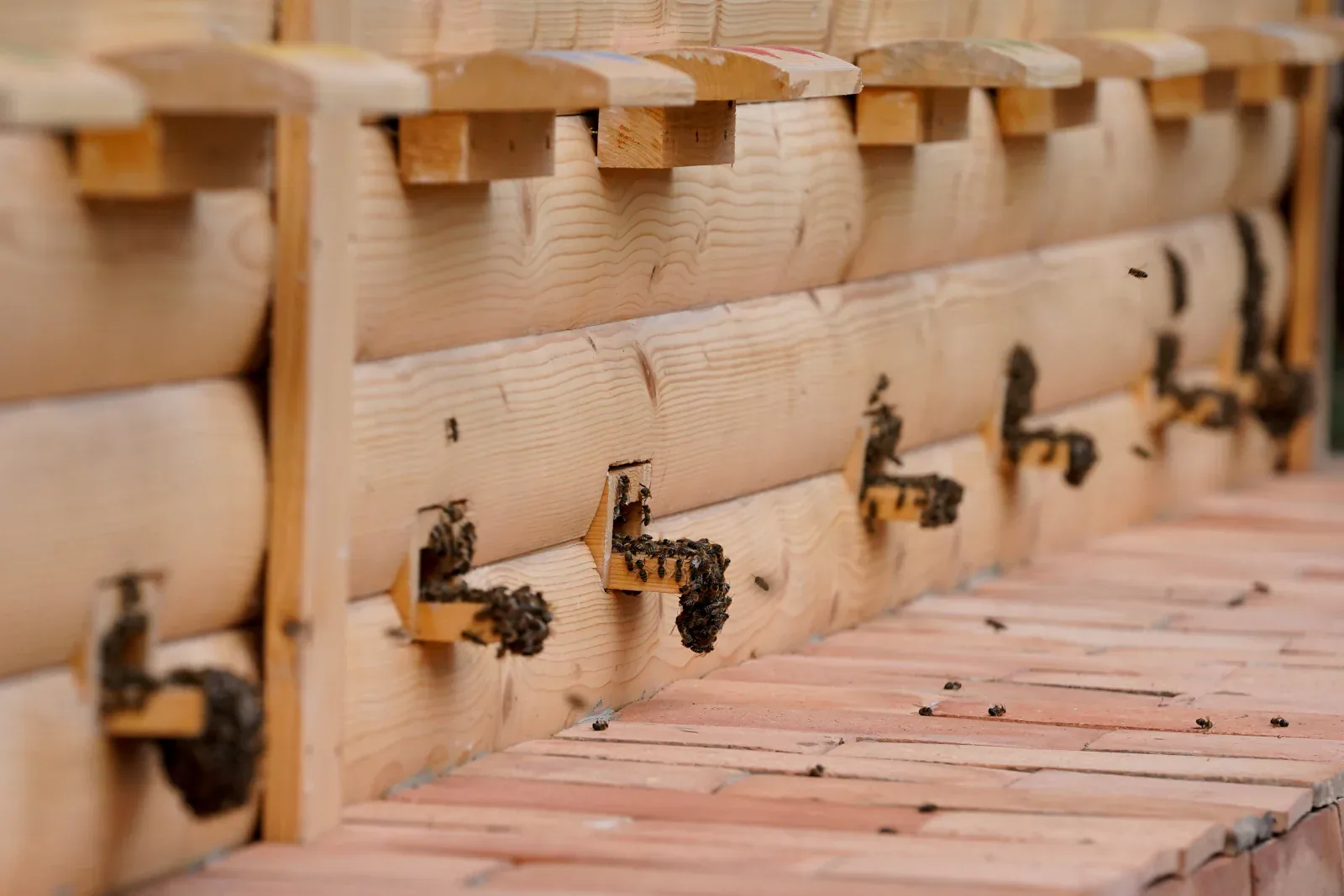
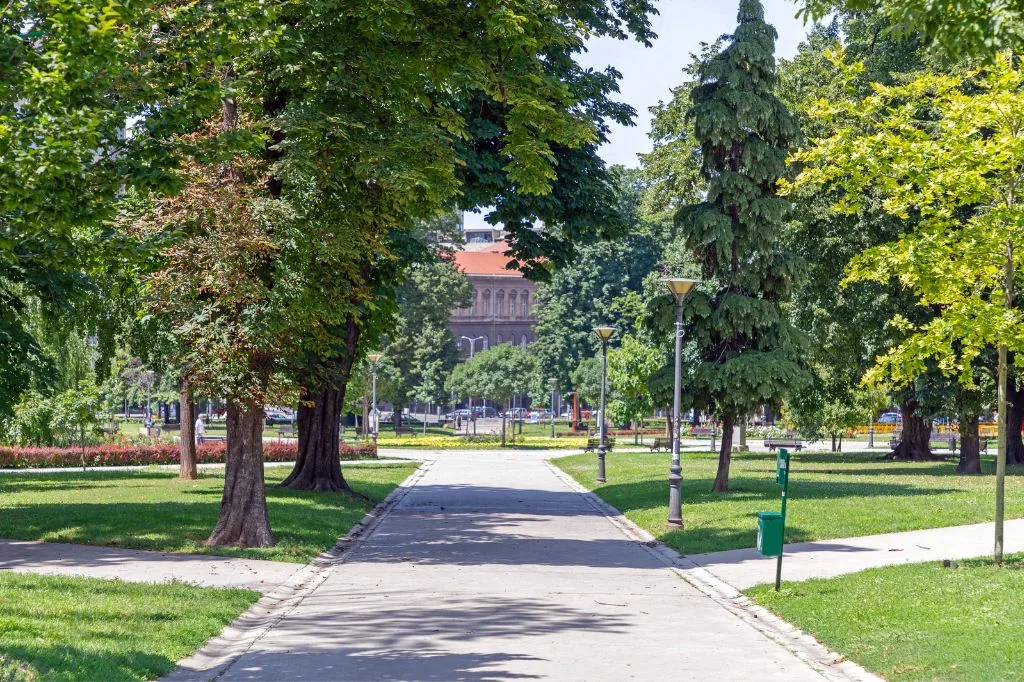
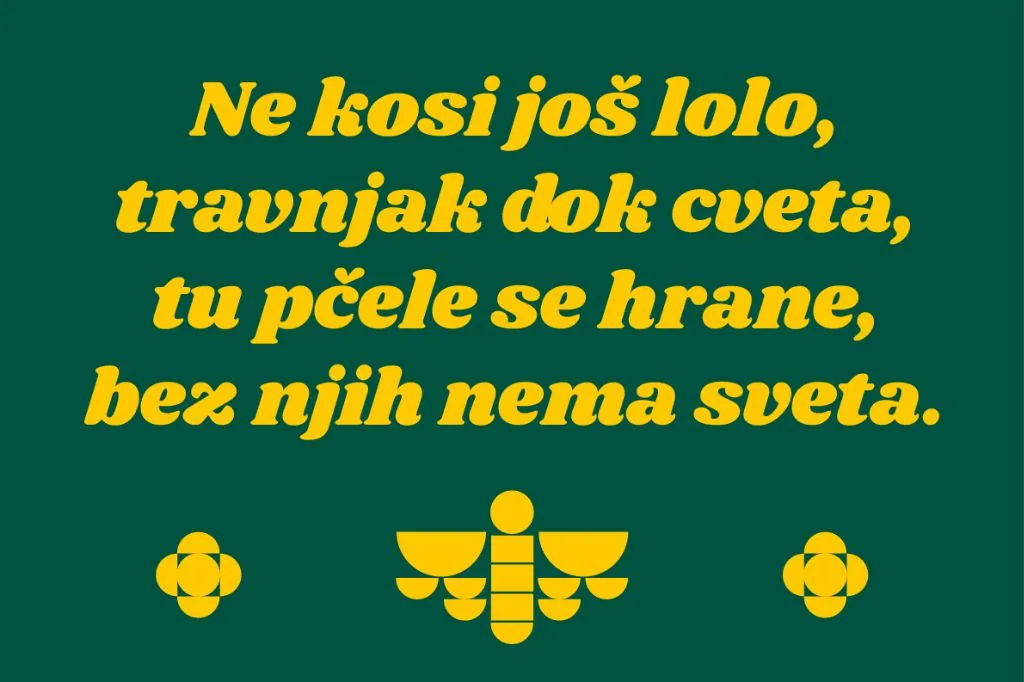
This lawn is tidy.Nothing on it is in flower.
04The no-mow rule
The mower stops and the flowers come back
A mown lawn looks tidy and green, and to a bee it is empty. Clover and wild flowers never get as far as flowering if the ground is mown on a schedule.
So part of the ground is left unmown through the season. At first it looks neglected, then it flowers, and then you can hear the bees in it.
This asks for nothing to be planted. It asks only that the ground is not cut, and that the arrangement is made with whoever maintains it.
05Planting actions
How a single planting comes about
Behind an action stand the Friends of the Honey Garden, where membership is free. When an action is larger, the saplings and the tools are covered by the company backing it.
The ground
First we find ground where a sapling is allowed to remain after the action is over. Without that, nothing else starts.
Choosing the species
We choose what to plant, by what can survive on that spot and by when it flowers.
The planting
The Friends gather, the tools are handed out and the planting is done together. Part of the work is explaining why this and not something else.
After the action
What went in and where is written down, and the watering is agreed. That count goes into the 5,200.
06How you take part
Two ways to get into this
One is for an individual and it is free. The other is for a company and it covers what an action actually costs.
An individual
Friends of the Honey Garden
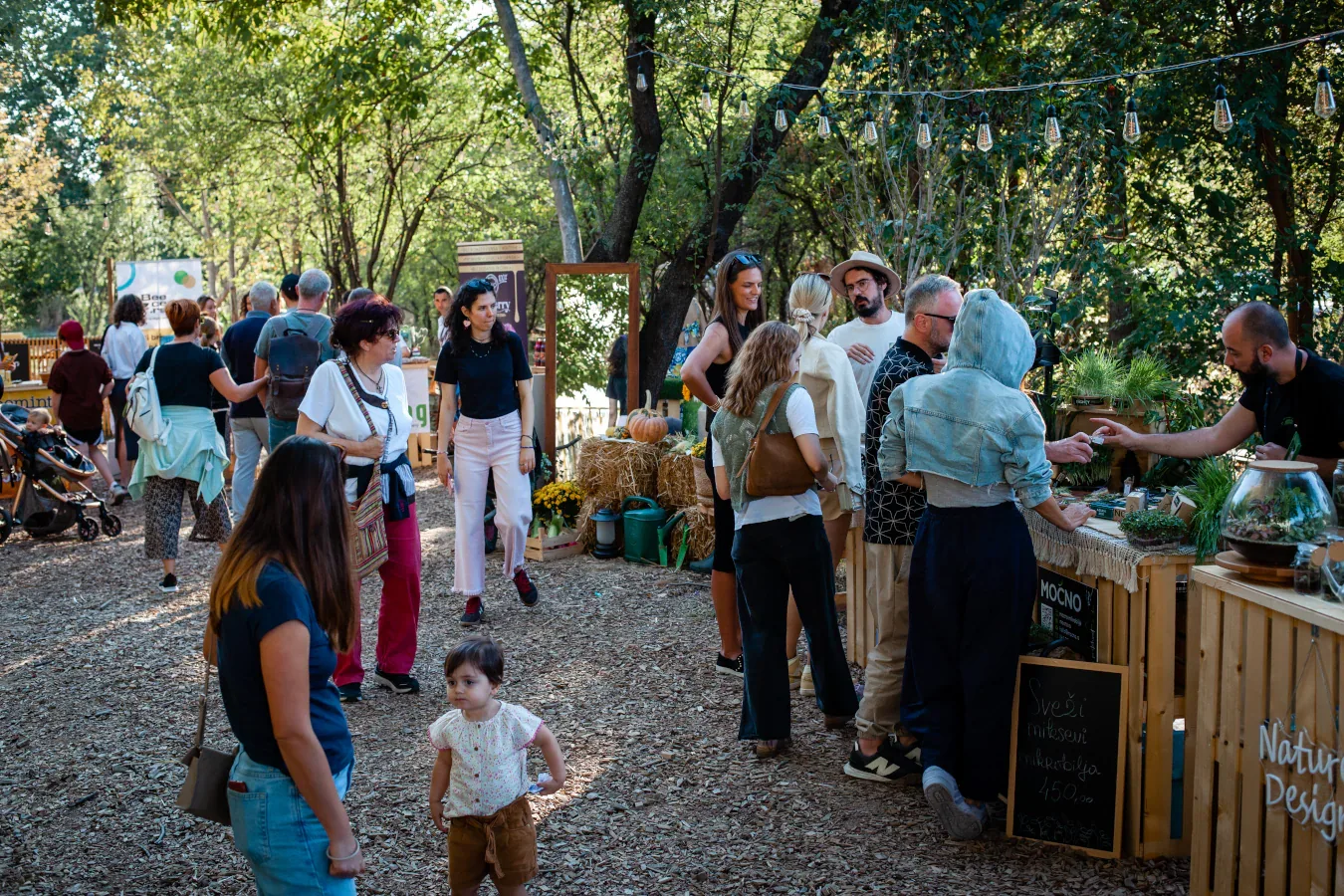
Membership is free. Members are called out to planting and greening actions and to the education, and the club stands up for biodiversity in the city.
A company
CSR and ESG partnership
A company covers a planting action and gets a written record of what was done and where, along with photographs from the day for its own channels.