Longer and more varied forage
Inside the flight radius there are a dozen different nectar sources instead of one. When one is over the next begins, so the colony is not left without food in the middle of summer.
Our projects · Urban beekeeping
Lindens, chestnuts, parks, yards, balconies and the plots nobody mows all flower at different times, so the forage in Beograd stretches across the whole season. Here we write down what that means for a hive, for the honey and for the city itself.
01Forage in the city
A monoculture field gives one kind of flower, and gives it briefly. Once that flow is over, a large green surface is left inside the flight radius with no nectar in it.
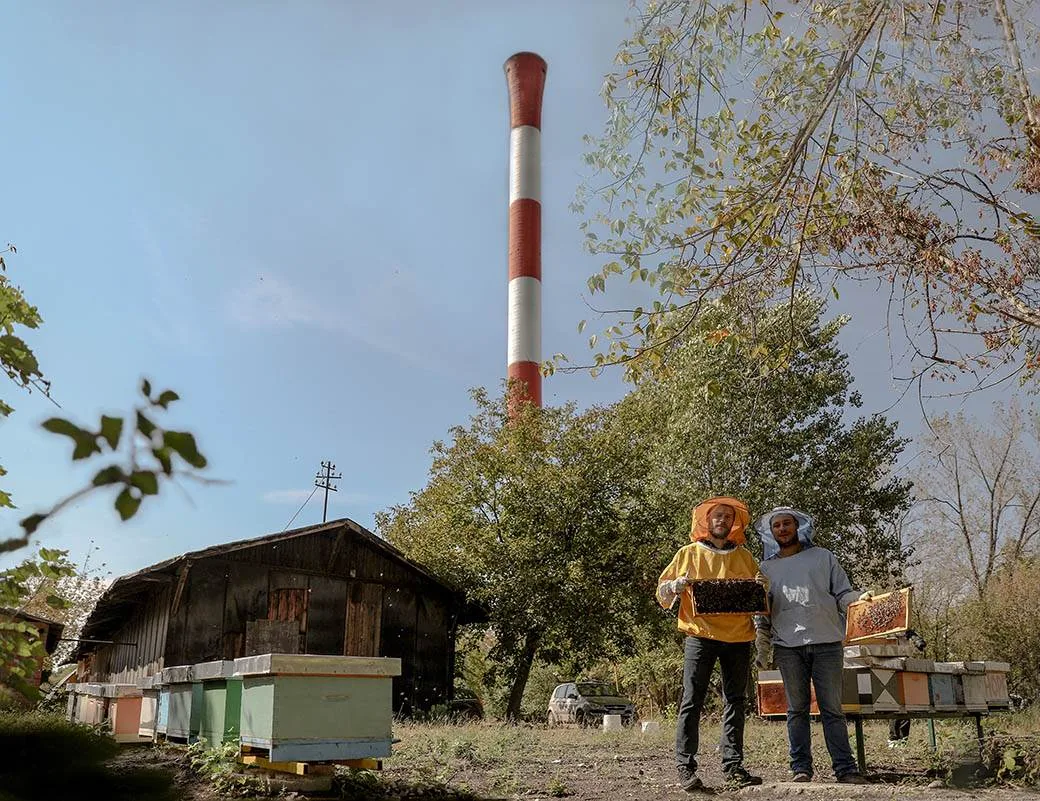
Nobody planted a city to a plan, and that is its advantage. Lindens along the street, chestnuts, acacia by the railway, roses and lavender in the yards, flowers on balconies, weeds on the plot nobody mows. None of it flowers on the same day.
That is why a hive in the city still has something to gather long after the fields are done.

02Why it works at all
All three are why beekeepers increasingly look at roofs rather than at fields.
Inside the flight radius there are a dozen different nectar sources instead of one. When one is over the next begins, so the colony is not left without food in the middle of summer.
Intensive agriculture treats by the calendar and across large areas. A park, a row of street trees and a back yard are not sprayed that way. A city carries its own burdens, exhaust fumes and dust, but not a treatment run across hundreds of hectares.
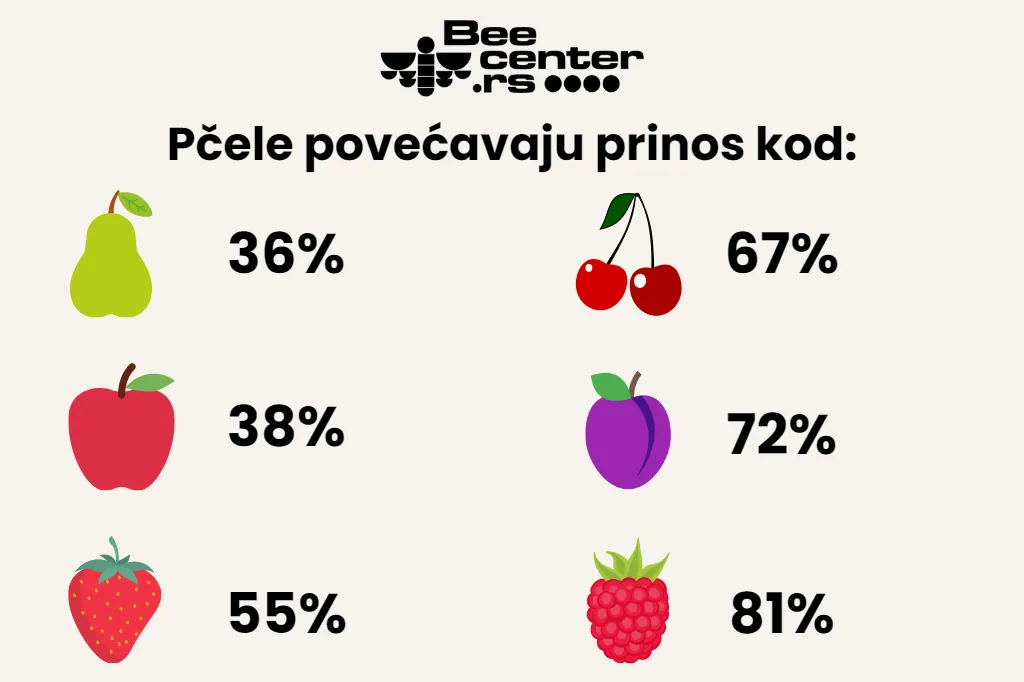
A bee pollinates in the city too: the fruit trees in the yards, the gardens, the street trees and every balcony with a tomato on it. A pollinated plant yields more, so a colony in the city counts as a workforce.
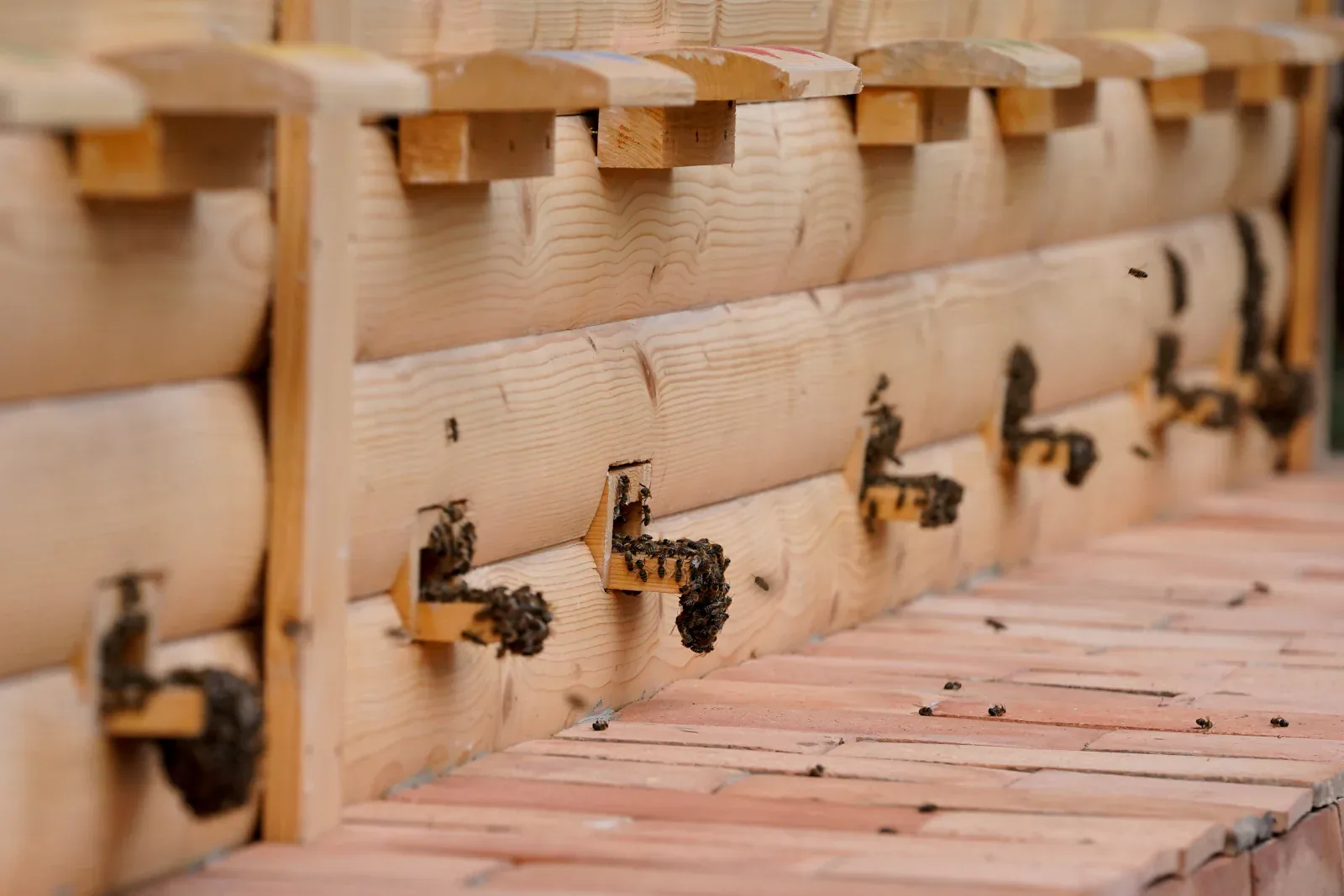
A bee leaves and comes back to the same entrance.In between, it covers three kilometres of city.
03What it takes
A roof and good intentions are not enough. This is what we check before a single hive goes up.
A flat roof, a yard or a plot. The beekeeper comes when it is cold as well, so the way to the hive has to exist all year.
Bees leave in one direction. With a fence or a hedge taller than a person in front of the entrance, the flight lifts above head height straight away.
With no water by the hive, the colony looks for it wherever it can, at the neighbours’ taps and bowls. A drinker by the hive settles that before it starts.
A worker goes up to three kilometres from the hive. Inside that circle there has to be something that flowers more than once, not only in May.
The owner of the roof and the people who work under it should know what stands above them and why. That is settled by a conversation, at the beginning.
A hive is watched through the season: swarming, food, the health of the colony, taking the honey off. Without that, what is left on the roof is a box.
04Honey and measurement
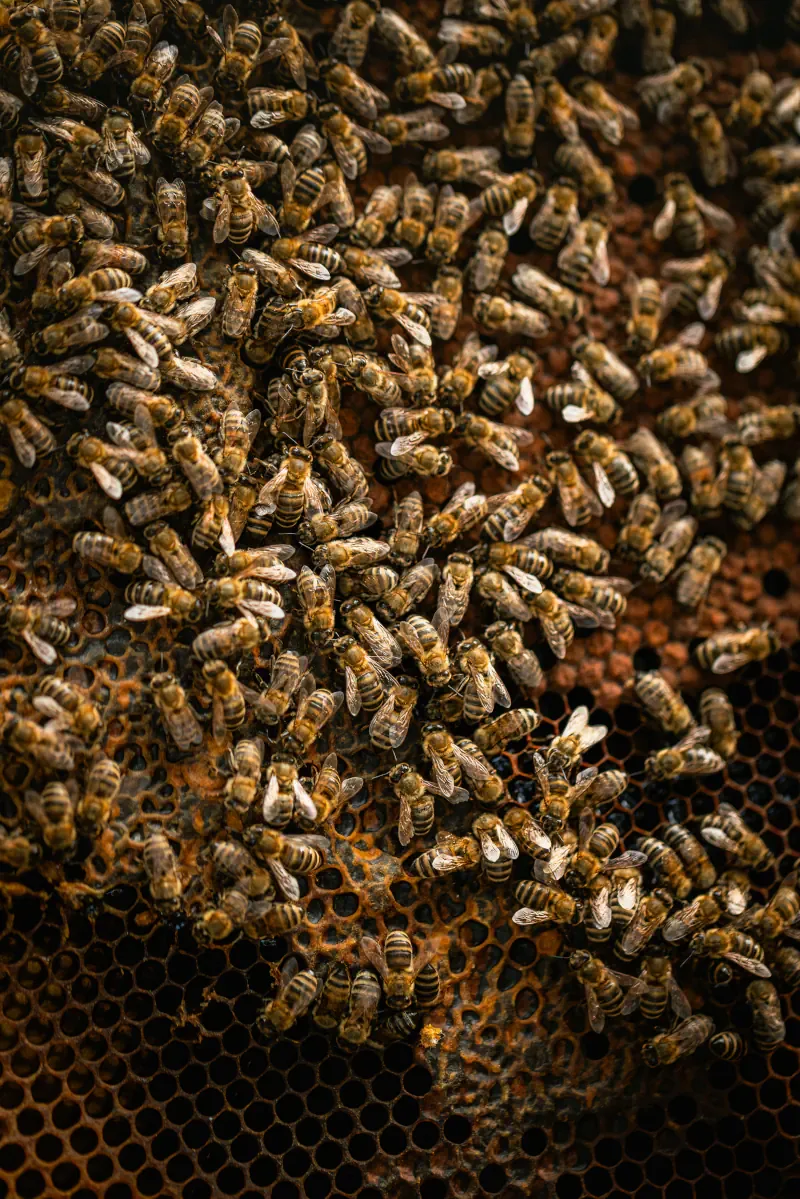
A colony searches the circle around the hive and brings back nectar, pollen, water and dust. What it brings in is a sample of its surroundings, and that is why a bee is used as an indicator of the state of the environment.
The same holds for the honey. What ends up in it depends on where the hive stands and what grows inside the flight radius, so the answer is found by analysis, as with any other food.
The laboratory issues the result, not the beekeeper and not a website. We do not publish the specific results for our honey here; if you need them, ask us in an enquiry.

Because of the forage and because of the people. A city has more species in flower and they flower at different times, so a hive has something to gather all season. A city is also where most of the people are who see a bee up close for the first time.
The answer depends on where the hive stands and what grows within the bees’ flight radius. It is checked by analysis, like any other food, and the laboratory issues the result. We do not publish the specific results for our honey on the site; if you need them, ask us in an enquiry.
Nectar and pollen from the street trees, the parks, the yards and the plots nobody mows. Linden, chestnut and acacia are the big city flows, and the rest comes from balconies, from gardens and from the weeds that flower when the fields have stopped giving anything.
A foraging bee flies straight for the flower and pays no attention to passers-by. A hive is placed so that the entrance does not face the path people walk, and a barrier in front of it lifts the flight above head height straight away. Stings happen when a colony defends itself or when a bee gets pressed.
Yes, if there is a roof, a yard or a plot, and someone who lets the beekeeper in all year round. Branded hives, planting and education run through our programme for companies, and what is feasible at your site becomes clear from the enquiry.
The planting continues through the Friends of the Honey Garden: planting actions, greening and education. Membership is free.
Companies that want a hive, a planting or an education programme in their own name do it through our programme for companies.