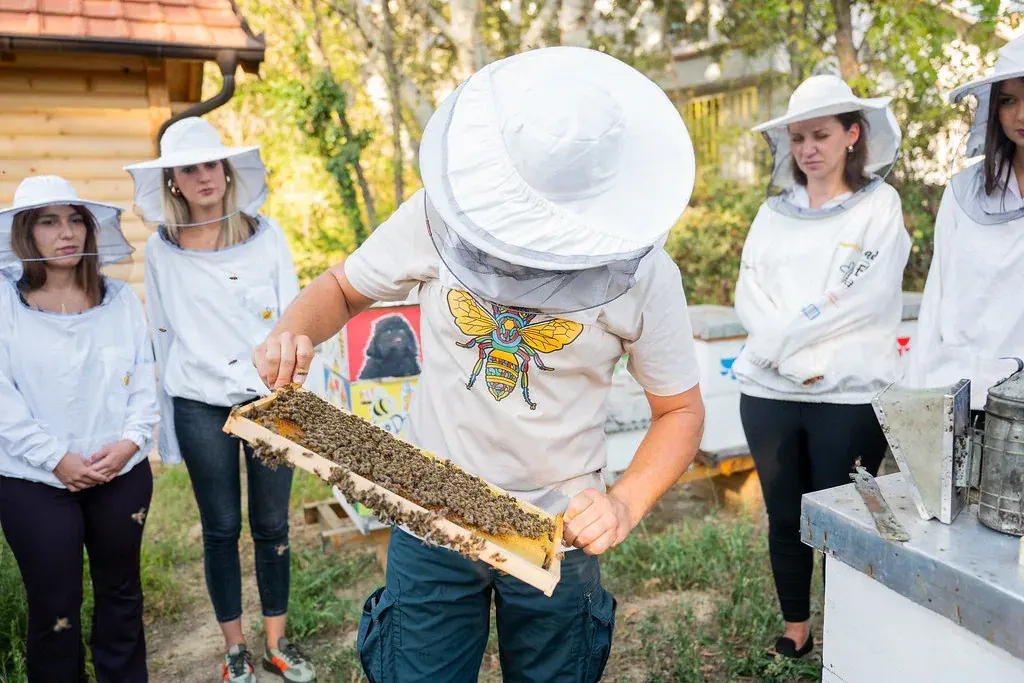
These are the facts spoken out loud most often in the Honey Garden, at the workshops, beside the glass hive and in the api chamber. Each of them usually opens the next question.
5
eyes on a single bee: two large compound ones at the sides and three simple ones on top of the head.
UV
light bees can see and we cannot: on a flower they read patterns invisible to the human eye.
200
beats a second a bee’s wings make, which is why flight sounds like buzzing.
Dance
is how bees talk: by it they tell the others the direction and distance to a source of food.
2,000
eggs a day a queen can lay at the height of the season, roughly her own body weight.
20,000+
species of bee live in the world, and most of them do not live in hives and make no honey.
No two
honeys are alike: colour, scent and taste depend on the plants the bees foraged from.
For centuries
honey can keep: low moisture, acidity and its other natural properties hold it stable for a very long time.
Propolis
is the hive’s building and protective material: bees seal cracks with it and keep the home clean.
170
scent-related genes a bee carries, so it recognises flowers, its own kin and chemical signals in the hive.
If any of this caught your interest, it is best seen in person. The experience in the garden lasts about two hours and takes you right up to the hive.